
Olive Oil Polyphenols: The EU Health Claim, Explained
Published on July 9, 2026 · Updated on July 12, 2026 · 7 min
By the Virginia trading team · reviewed by Tarek Neffati, president
Polyphenols have become the premium argument in olive oil: they carry an authorised EU health claim, they can be measured in a laboratory, and they cleanly separate an early-harvest oil from an end-of-season one. For a buyer, three questions really matter — at what level the claim becomes usable on a label, how the figure on a certificate was actually measured, and how to lock in a high level all the way to bottling. This guide answers all three, without hand-waving.
What olive oil polyphenols actually are
"Polyphenols" is an umbrella term for several dozen phenolic compounds found in virgin olive oil. The ones worth knowing as a buyer are few:
- Oleuropein: the parent compound in the fruit, which breaks down during milling into smaller molecules.
- Hydroxytyrosol and tyrosol: phenolic alcohols produced by that breakdown. Hydroxytyrosol is the reference molecule behind the EU health claim.
- Oleocanthal: responsible for the peppery catch at the back of the throat (pungency), and studied for its anti-inflammatory activity.
- Oleacein, lignans (pinoresinol), flavonoids (luteolin, apigenin): they round out the profile and the antioxidant signature.
These compounds play three roles at once, which is why they matter commercially. First a nutritional role, the basis of the health claim. Second an oxidative-stability role: they are natural antioxidants that protect the oil through transport and storage and push back rancidity. Third a sensory role: bitterness comes from the polyphenols, especially oleuropein aglycone, while pungency — that throat tingle — signals oleocanthal. So an intense, green, slightly peppery oil is not a fault; it is the taste marker of a high level.
The EU health claim: exact wording and conditions
The claim appears in Regulation (EU) No 432/2012, which lists the authorised health claims. Its validated wording is precise: "Olive oil polyphenols contribute to the protection of blood lipids from oxidative stress." You cannot reword it freely; only formulations with an equivalent meaning are allowed.
The conditions of use come down to two points, both mandatory:
- The threshold. The oil must contain at least 5 mg of hydroxytyrosol and its derivatives (oleuropein complex and tyrosol) per 20 g of oil. Per kilogram, that is 250 mg/kg — the number to remember and to put in the contract.
- The intake statement. The label must inform the consumer that the beneficial effect is obtained with a daily intake of 20 g of olive oil.
Two practical implications are routinely missed. First, the threshold covers a specific family of compounds — hydroxytyrosol and its derivatives — not "total polyphenols": the figure on your COA must express that family, not a generic total. Second, polyphenols decline over time; an oil that is just above the threshold at loading can drop below it before its shelf life ends. Using the claim means guaranteeing the threshold across the relevant period, not only on the day of analysis.
Measuring polyphenols: why two figures rarely match
This is the number-one trap in the "high phenolic" market: two laboratories can report very different figures for the same oil without either lying. It all depends on the method and the unit.
- Folin-Ciocalteu: a fast, cheap spectrophotometric method that measures the sample's total reducing (phenolic) capacity. The result is expressed in equivalents of a reference compound (gallic acid, caffeic acid or tyrosol) — and the figure shifts with the standard chosen. Useful for a quick screen, not for the claim.
- HPLC per the IOC method COI/T.20/Doc No 29: the International Olive Council's official method, which separates and quantifies phenolic compounds one by one (hydroxytyrosol, tyrosol, secoiridoid derivatives, lignans, flavonoids). Heavier, but specific.
- HPLC after acid hydrolysis: the approach used for the health claim, which releases and then sums hydroxytyrosol, tyrosol and their derivatives to produce the "≥ 5 mg / 20 g" value. That is the legally defensible figure.
- Quantitative NMR (qNMR): used in research and for confirmation.
The consequence: a Folin total quoted at "600 mg/kg" does not mean the oil clears the claim threshold, because HPLC on the targeted family often returns a lower number — a gap of the order of 15 to 25 % between the two readings is common. So insist that the COA states the method used and the reference compound. Without that detail a polyphenol number means nothing — the same is true of every other parameter, as our guide to reading an olive oil COA explains.
| Method | What it measures | Expressed as | Use |
|---|---|---|---|
| Folin-Ciocalteu | Total phenolic capacity | Equivalents (gallic, caffeic acid or tyrosol), mg/kg | Quick screen |
| HPLC (COI/T.20/Doc No 29) | Individual phenolic compounds | mg/kg per compound | Profiling, official method |
| HPLC after acid hydrolysis | Hydroxytyrosol + tyrosol + derivatives | mg per 20 g | Health-claim value |
| qNMR | Phenolic profile | mg/kg | Research, confirmation |
What drives the level: variety, harvest, process, freshness
Four levers set the polyphenol level, in order of impact.
Variety. Not all varieties start equal. Chetoui, dominant in northern Tunisia, yields intensely green-fruity oils that are naturally rich in polyphenols; Chemlali, from the centre and south, gives softer, ripe-fruity oils with a lower load. If you are targeting a high level, variety is the first choice — see our comparison of the Chetoui and Chemlali varieties.
Harvest date. This is the most powerful lever. Olives picked early, still green (at veraison, low maturity index), yield markedly richer oils; the polyphenol level then falls sharply as the fruit ripens. In practice, early-harvest oils routinely exceed 400 to 600 mg/kg, while end-of-season oils often drop below 250 mg/kg. Oil yield is lower at early harvest — hence the higher price that this segment accepts.
Process. Cold extraction, a short delay between picking and milling, controlled malaxation temperature and time: any mishandled step loses polyphenols. A healthy olive milled within the day keeps what its variety and harvest date gave it.
Freshness. Polyphenols are not stable: they decline under light, heat, air and time, over a typical shelf life of 12 to 18 months. An oil stored in stainless steel under nitrogen and kept cool will hold its level far better than an exposed one — hence the conditions set out in our guide to storing bulk olive oil. In concrete terms, this governs the best-before date and the margin to build above the threshold.
Sourcing high-polyphenol oil in bulk
The classic mistake is to specify a level "at loading". But your label has to hold to the end of the finished product's shelf life. The right reflex: specify a threshold at bottling, with a safety margin above 250 mg/kg, and tie it to a named method. The table below maps each lever to its contractual translation.
| Lever | Effect on polyphenols | How to contract it |
|---|---|---|
| Variety (Chetoui vs Chemlali) | Chetoui naturally richer | Variety or blend specified in the spec sheet |
| Harvest date | Early = richer | Early-harvest lot, defined harvest window |
| Extraction (cold, fast) | Preserves polyphenols | Cold extraction, capped olive-to-mill delay |
| Storage (stainless, nitrogen, temperature) | Slows the decline | Tank conditions written into the contract |
| Freshness at bottling | The level falls over time | Threshold ≥ 250 mg/kg at bottling + method, not at loading alone |
Two clauses complete the setup: a per-lot polyphenol assay on the COA, method specified, and the option of an independent counter-analysis such as SGS at loading. A supplier confident in its lots accepts both without reservation.
Positioning: the premium "high phenolic" segment
Polyphenol content has become a differentiation axis in its own right. The benchmarks commonly used in the market place the "high" threshold around 250 mg/kg, "premium" beyond 500 mg/kg, and "elite" above 1,000 mg/kg. This segment positions itself less as a condiment than as a health product: pharmacy and para-pharmacy channels, specialist e-commerce, wellness-led brands. Tunisian early-harvest oil, especially from Chetoui, is entirely legitimate here — provided the analytical proof comes with it, which is the heart of our quality approach.
Lock in your claim with Virginia
A "polyphenols" claim is not won at loading: it has to hold to the label of the finished product. On every lot we assay hydroxytyrosol and its derivatives by a method named on the certificate, with the margin above 250 mg/kg that shelf life demands, and an independent SGS-type counter-analysis stays available at loading. Request samples of our early-harvest Chetoui oils, compare the COAs, then request a quote on the lot that will carry your claim all the way to the label.
Read next
QualityLogistics
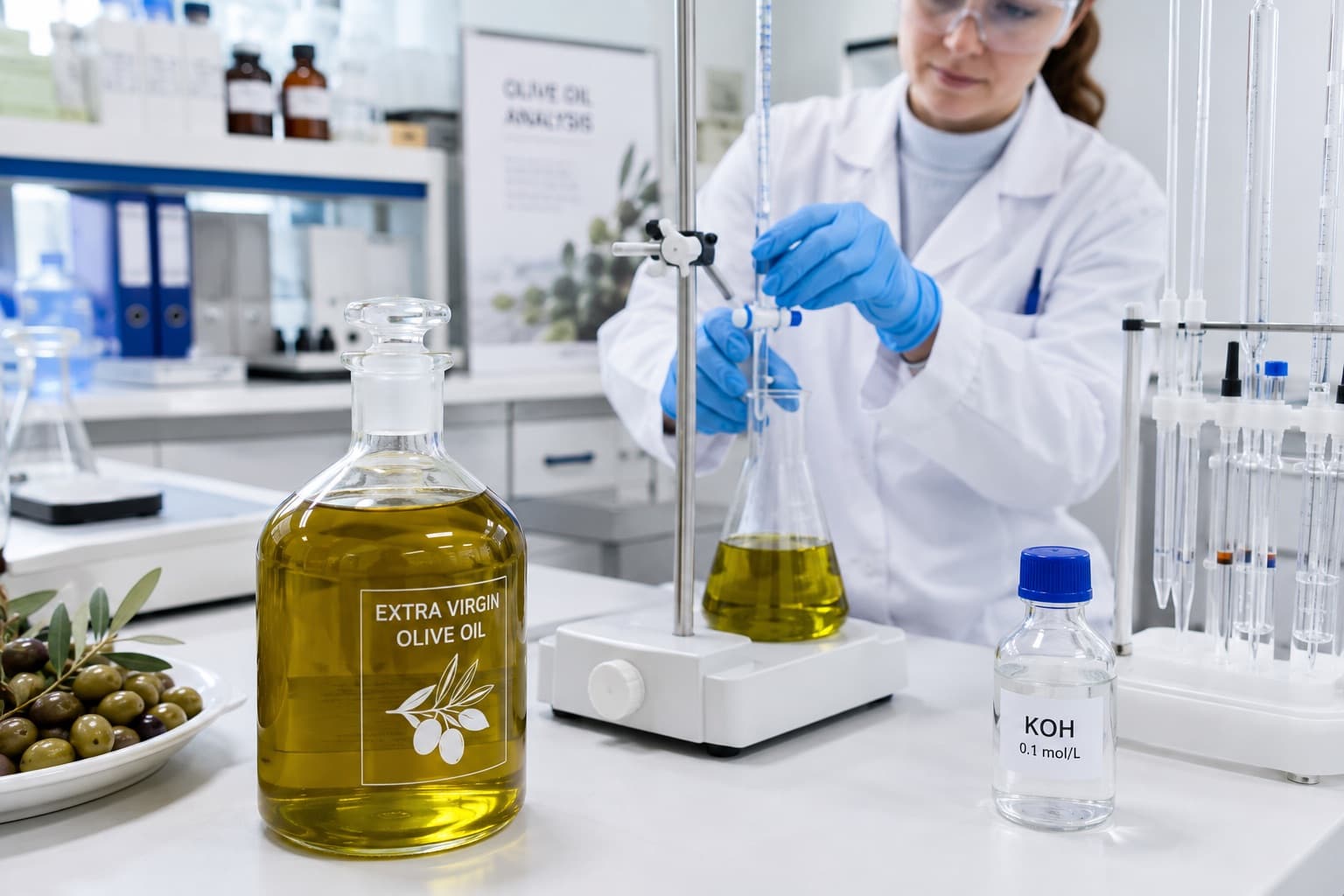
Bulk Olive Oil Sampling Protocol: ISO 5555 & IOC Method
ISO 5555, the IOC's 10/30/10 tank method, sealed counter-samples: the sampling protocol every buyer should demand before any bulk olive oil purchase.
October 2, 2026 · 7 min read
Quality
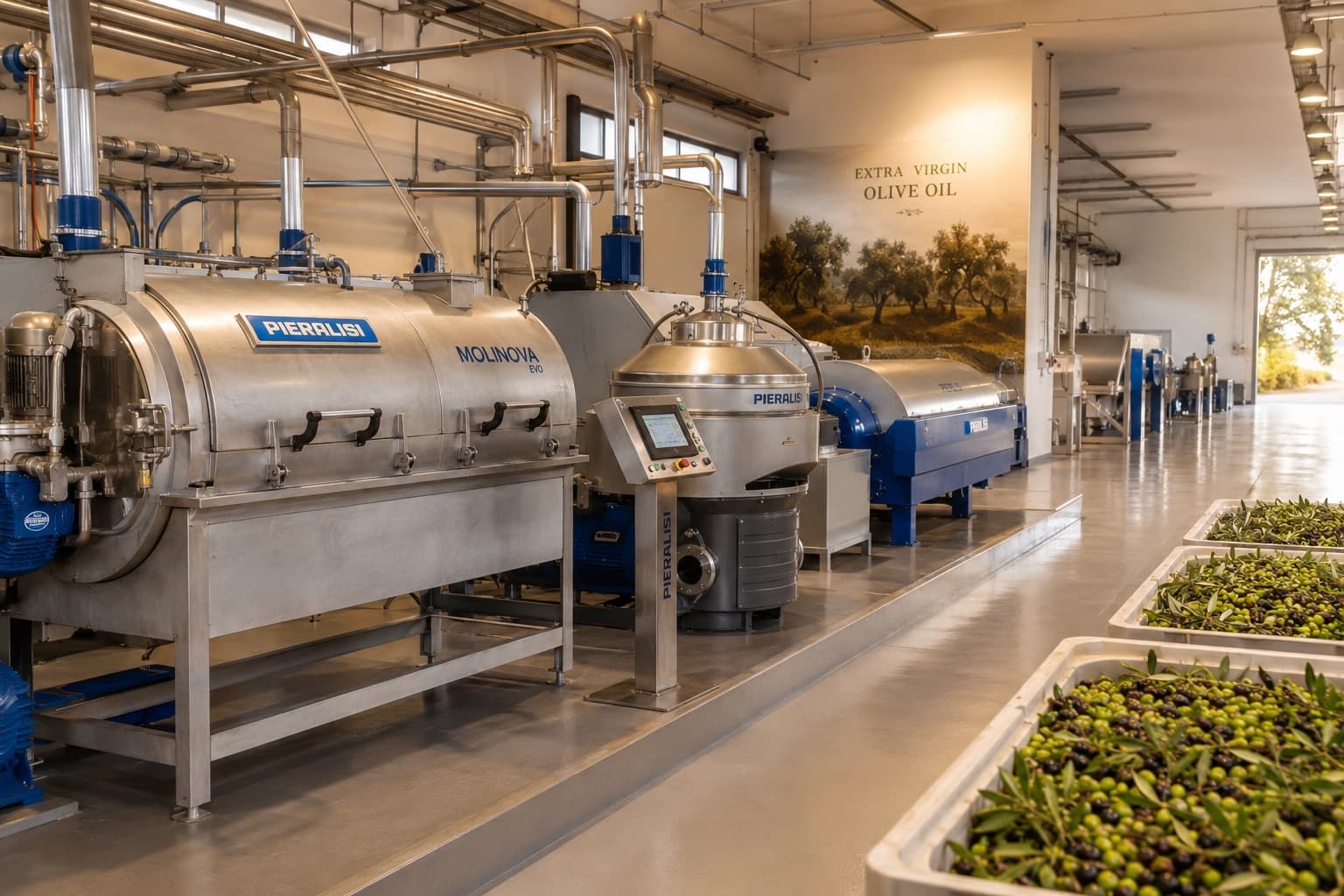
Cold-Extracted Olive Oil: Why the Decanter Matters
Two-phase or three-phase decanter, malaxation temperature: what actually separates a genuinely cold-extracted olive oil from the rest of the label claims.
August 31, 2026 · 7 min read
Tell us what you need.
Volume, grade, packaging, destination: describe your project and we'll get back to you within one business day with an offer at the best price — or the right questions.