
Olive Oil for Cosmetics: Grades, Specs and Sourcing
Published on July 12, 2026 · 7 min
By the Virginia trading team · reviewed by Tarek Neffati, president
A skincare brand, a soap works or a contract manufacturer buying olive oil is not filling in the same spec sheet as a food bottler. The oil is identical at source, but everything downstream changes: the INCI name, the regulatory file, the grade that suits the formula, controlled residues, documentation. Here is how to source cosmetic-grade olive oil on solid ground — composition, uses, grades, specifications and packaging.
Why olive oil in cosmetics
Under its INCI name Olea Europaea Fruit Oil (older spelling: Olea Europaea (Olive) Fruit Oil), olive oil ranks among the most widely used plant lipids in formulation. The reason lies in a composition remarkably close to the skin's own hydrolipidic film.
- Oleic acid ~70% (real range 55 to 83% depending on variety and origin): this omega-9 delivers skin affinity, emolliency and a cushioning slip that absorbs without a heavy occlusive feel.
- Squalene: olive oil is one of the richest plant sources of squalene, a molecule of the unsaponifiable fraction. That same squalene is the precursor to plant-derived squalane (more below).
- Vitamin E (tocopherols): a natural antioxidant that protects both the formula and the skin.
- Polyphenols (hydroxytyrosol, tyrosol): antioxidants, best preserved in unrefined virgin grades.
The rest of the profile matters too. Alongside oleic, olive oil carries palmitic acid (often 10 to 15%) and a moderate share of linoleic acid. Few polyunsaturated bonds means an oil that is relatively stable to oxidation for a plant lipid — a direct benefit to formula shelf life. Its comedogenic rating stays low to moderate, which makes it acceptable in most facial care subject to dosage.
This combination explains the ingredient's versatility: emollient, superfatting agent, base oil phase, or antioxidant active depending on concentration.
Uses in formulation
Soap making
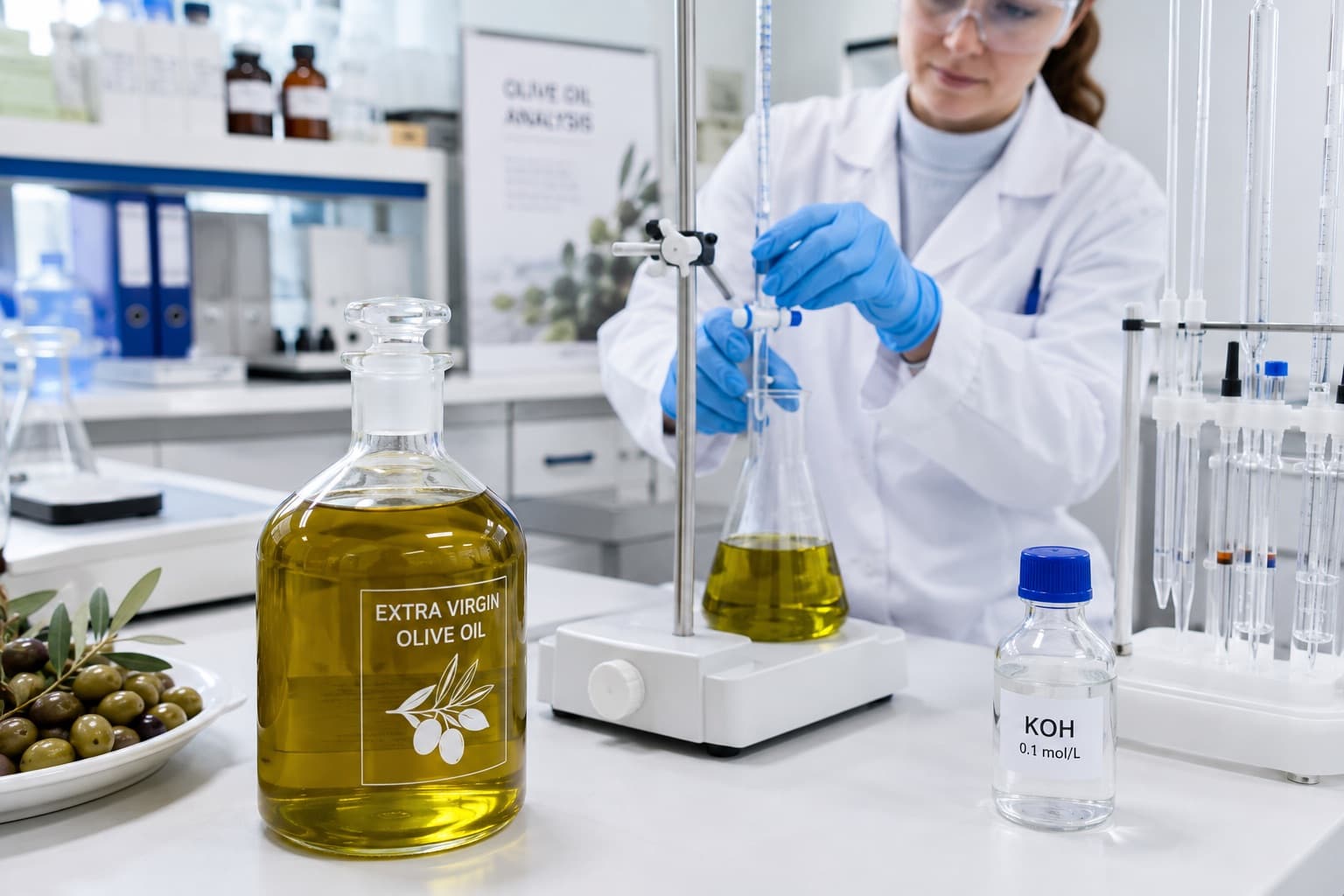
This is the historical outlet. In cold process, olive oil yields a mild, conditioning bar with a fine, creamy lather. Its saponification value is about 190 mg KOH/g (a lye factor close to 0.134 for NaOH), a low figure tied to the length of its oleic acid chain. Three traditions follow: Castile soap (100% olive), Marseille soap (at least 72% vegetable oils, with olive as the pillar) and Aleppo soap (olive plus laurel berry oil).
Skincare and fluid cosmetics
Massage oils, anhydrous balms, cleansing oils and milks, serums, superfatted bars, the oil phase of emulsions. Here olive oil acts as an emollient and a carrier.
Haircare
Hair oils and oil baths, masks, leave-in treatments, rich conditioners.
Cleansing bases
Soap salts and pastes, syndets, potassium-based liquid soaps where olive brings mildness and conditioning.
The derived plant squalane
Hydrogenating the squalene extracted from olive unsaponifiables yields squalane (INCI Squalane), a fully saturated compound that is stable, non-greasy and does not go rancid. It is the plant alternative to animal-sourced squalane and a premium ingredient in its own right — a way of valorising the unsaponifiable fraction further up the chain.
Which grade for which use
The right grade is a trade-off of cost, odour, colour and stability — not food quality alone.
- Extra virgin and organic: premium skincare, natural brands, an "with virgin olive oil" label claim. Colour, vegetal aroma and polyphenols are preserved. Highest cost.
- Standard virgin or refined lampante: volume soap making and cleansing bases, where the colour and aroma of an extra virgin are neither needed nor wanted. Refined lampante offers a neutral, clear, stable oil at a controlled cost. These categories are detailed in our guide to olive oil grades, from lampante to pomace.
- Deodorised: for formulas where any olfactory note would interfere with the finished fragrance.
Cosmetic specifications versus food specifications
A food COA is not enough for a cosmetics responsible person. What changes or is added:
- Acid value and peroxide value: common to both worlds, but often contracted to tighter thresholds on the cosmetic side to guarantee formula stability.
- Heavy metals: lead, arsenic, mercury, cadmium, assayed to the product file's expectations.
- PAH (polycyclic aromatic hydrocarbons), benzo(a)pyrene foremost, monitored in fatty matrices.
- Pesticides: a multi-residue screen, a strong argument for a low-input origin.
- Allergens: olive oil itself carries no Annex III declarable allergens — those are fragrance compounds. IFRA is not applicable to an unfragranced plant oil, and neither is RSPO (which concerns palm oil).
- Oxidative stability: measured on the Rancimat (induction time in hours), a key criterion for the shelf life of a balm or an oil.
On the paperwork side, a serious supplier attaches:
- a cosmetic COA (tighter specs and the parameters above);
- an SDS (safety data sheet, REACH framework);
- a certificate of origin;
- a BSE/TSE declaration confirming 100% plant origin, free of animal material;
- a non-GMO declaration.
The regulatory frame to know
In Europe, Cosmetics Regulation (EC) 1223/2009 governs the finished product. It requires a responsible person (the entity placing the product on the market) and a PIF (Product Information File) including the Cosmetic Product Safety Report (CPSR), kept for at least ten years after the last batch, with manufacture compliant with ISO 22716 good practice. The raw-material supplier is not the responsible person, but it feeds the PIF: its specifications, its SDS and its traceability form the documentary base.
For organic cosmetics, the COSMOS standard (audited notably by Ecocert) qualifies ingredients. Olive oil already certified organic upstream makes its admission as an approved organic ingredient under COSMOS far smoother; without that, the raw material undermines the whole organic-percentage calculation of the formula.
Organic Tunisian oil as a concrete cosmetic asset
Tunisia ticks the boxes a demanding formulator looks for. Lot-by-lot traceability ties each oil to its mill of origin. The orchard, mostly rain-fed and lightly treated, produces oils whose multi-residue screens frequently come back below limits of quantification — a decisive point for a cosmetic file. And the sheer scale of the country's organic olive grove gives access to recurring volumes, the condition of an industrial supply.
Variety choice opens a further formulation lever. Chetoui from the north, intensely green and fruity, is naturally high in polyphenols — an asset for an oil claimed as antioxidant or for a premium balm. Chemlali from the centre and south, milder and ripe-fruity, suits neutral bases and formulas that want a discreet carrier. Sourcing by variety, not by grade alone, sharpens the cosmetic result. We cover this origin in our guide to organic Tunisian olive oil in bulk, and the export terms on our bulk from Tunisia page.
Packaging that fits contract manufacturers
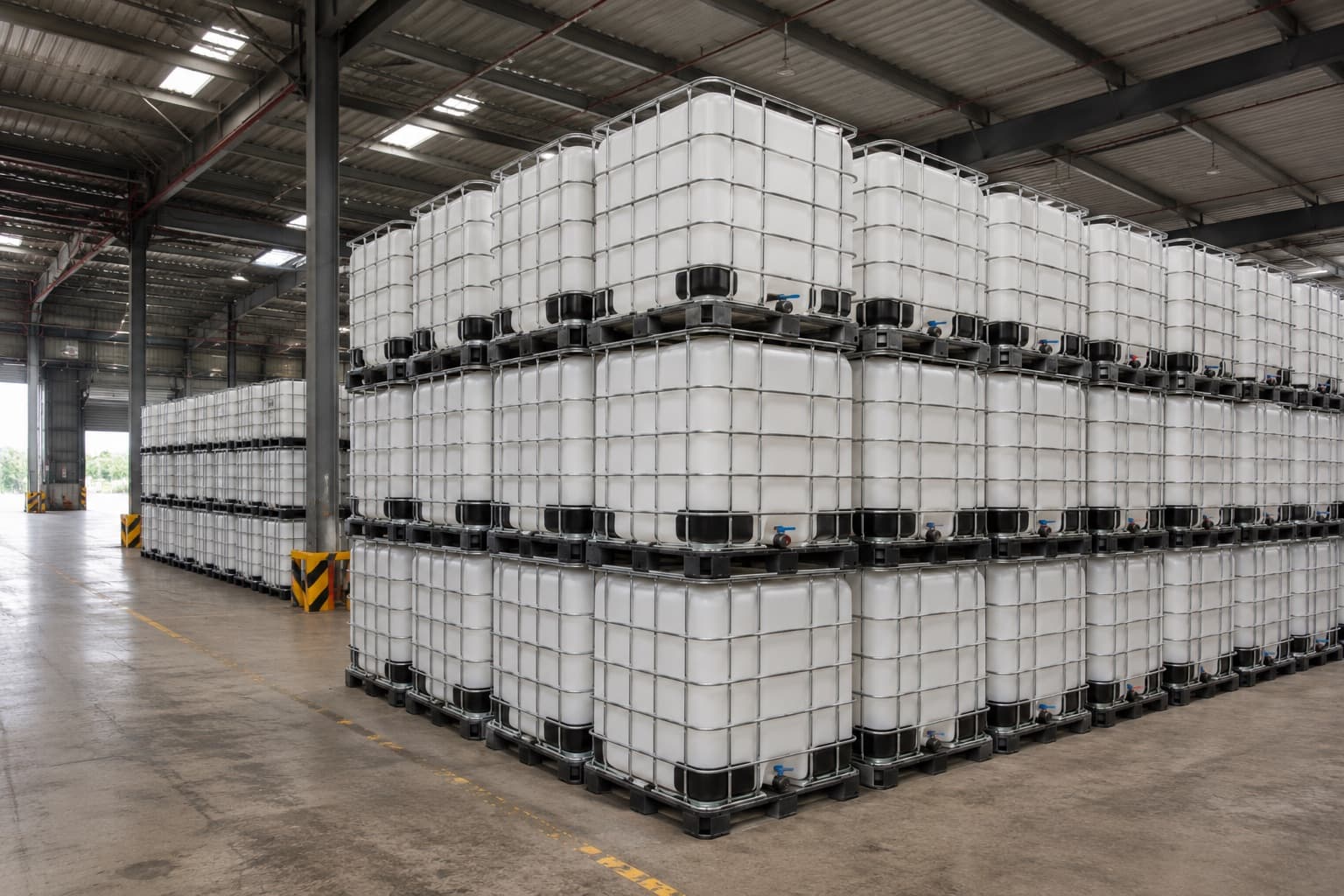
Cosmetics rarely consume a full flexitank. They buy in smaller but recurring lots, aligned with production runs. The relevant formats are the 200 L drum (≈ 180 kg of oil) and the 1000 L IBC (≈ 916 kg, density ≈ 0.916 kg/L), easier to store and dispense on the shop floor. These containers, their inerting and their logistics are covered in our drums, IBCs and bag-in-box comparison.
From sample to contract: qualifying a cosmetic lot
Qualifying a lot follows a logic specific to cosmetics. You first request the target specifications and the SDS, then a sample representative of the chosen grade and variety. Next comes the in-house trial: compatibility with the formula base, accelerated-ageing stability, colour and odour checks on the finished product. Once the formula is validated, the specification is locked into the contract — parameters, thresholds, expected documents — and supply is set as recurring lots aligned with production runs. This upfront discipline heads off the batch-to-batch reproducibility surprises that are the main risk of a natural ingredient.
Summary: use, grade, specs, packaging
| Cosmetic use | Recommended grade | Critical specifications | Typical packaging |
|---|---|---|---|
| Premium skincare, natural brand | Extra virgin, organic | Polyphenols, Rancimat, residues < LOQ, cosmetic COA | 200 L drums, IBC |
| Volume cold-process soap | Standard virgin or refined lampante | Stable saponification value, acidity, colour | IBC, flexitank |
| Cleansing base, syndet | Refined deodorised | Neutral odour/colour, low peroxide | IBC |
| Massage oil, balm | Extra virgin or virgin | Oxidative stability (Rancimat), SDS, allergens | 200 L drums |
| Plant squalane (upstream) | Olive unsaponifiables | Purity, iodine value, traceability | Per process |
Prepare your cosmetic sourcing with Virginia
Describe your formula — target grade, variety, the thresholds in your product file — and we prepare the matching lot: cosmetic specifications written into the contract, SDS plus BSE/TSE and non-GMO declarations supplied with each lot's COA, 200 L drums or IBCs timed to your production runs. Virginia's partner-mill network makes it possible to source by variety, from organic extra virgin to refined lampante, with independent counter-analysis available at loading. Request a quote stating your application: qualification within 24 business hours, a trial sample before any commitment.
Read next
MarketGuides
Bulk Olive Oil for Nutraceuticals and Softgels
Olive oil as a softgel carrier oil and nutraceutical ingredient: Ph. Eur., USP-NF, oxidative stability, specs and bulk sourcing for encapsulators.
September 2, 2026 · 7 min read
GuidesQuality
Deodorized Olive Oil: The Industrial Buyer's Guide
Deodorized olive oil explained: the refining process, uses in frying, canning and cosmetics, and the COA specs to demand before buying it in bulk.
August 28, 2026 · 7 min read

Tell us what you need.
Volume, grade, packaging, destination: describe your project and we'll get back to you within one business day with an offer at the best price — or the right questions.