
Private Label Olive Oil: Steps, MOQs, Costs, Lead Times
Published on July 9, 2026 · Updated on July 12, 2026 · 8 min
By the Virginia trading team · reviewed by Tarek Neffati, president
Launching an olive oil under your own brand is no longer the preserve of major retail chains: distributors, e-commerce sellers, gourmet grocers and restaurant groups now commission their own SKU, from brief to pallet, without owning a mill or a bottling line. The project succeeds or fails on very concrete points: the grade you choose, profile validation on samples, label compliance, and the cost mechanics of everything around the oil itself. Here are the steps, realistic MOQs, cost drivers and pitfalls of a private label launch.
Why private label is winning in olive oil
Retailer brands now account for close to 40% of grocery value sales across Europe according to PLMA/NielsenIQ figures, with eight national markets above that threshold — and olive oil is a natural expansion territory: an everyday staple, strong price sensitivity, and real room to differentiate on origin, organic certification and taste profile. For the buyer, private label converts a traffic product into captured margin: the value that used to flow to the national brand stays in the house.
Tunisian origin is particularly competitive for this game. At equal grade and equal analysis, it generally trades below Spanish and Italian origins — a structural discount rooted in production costs and market structure, not in intrinsic quality. Tunisia also ranks among the world's leading producers of organic olive oil, which makes organic private labels feasible at workable retail prices. And its two dominant varieties — Chetoui (intense green fruitiness, polyphenol-rich) and Chemlali (mild, ripe-fruity) — support both a premium positioning and a crowd-pleasing one.
The six steps from brief to container
1. Define the positioning
Everything starts with three decisions: the grade (extra virgin, organic extra virgin, virgin), the sensory profile (assertive green fruitiness or accessible mildness) and the target retail price, which works backwards into the budget available for oil and packaging. An early-harvest green-fruity oil and a mild blended oil tell different stories on the shelf and carry different costs. Our olive oils range sets out the grades and profiles available to frame that decision.
2. Validate the profile on samples and COA
Never commit from a catalogue. The profile is approved on samples drawn from the actual lot, backed by their certificate of analysis (COA) — free acidity, peroxide value, K232/K270/ΔK, polyphenols on request — and confirmed by tasting. The approved sample becomes the contractual reference: that sample plus the COA, not a brochure, is what every subsequent production run is held against.
3. Choose the format
Format is a channel decision as much as a cost decision:
- 250 mL glass: delis, gifting, premium oils with high per-litre value.
- 500 mL and 750 mL glass: the retail core; Marasca and Dorica shapes dominate, in dark UV-protective glass.
- 1 L glass: heavy-user households, Mediterranean channels.
- 1–5 L metal tins: food service and bulk consumers; complete light protection.
- 1–5 L PET: entry price point, lighter and breakage-free in logistics.
Launching on many formats at once fragments production runs and inflates every unit: start with one or two formats and extend based on actual rotation data.
4. Design the label and lock down compliance
This is the most underestimated step. Each target market has its own rulebook:
- European Union: category name with its exact legal wording, mandatory origin designation for virgin oils, storage conditions, best-before date, lot number, nutrition declaration — the framework is set by Delegated Regulation (EU) 2022/2104 and the FIC Regulation (EU) 1169/2011. We cover the detail in our guide to EU olive oil labelling rules.
- United States: Nutrition Facts panel built on the FDA reference serving (1 tablespoon / 15 mL), net contents in US customary and metric units, a "Product of" statement, importer details.
- Gulf states: mandatory Arabic labelling (GSO 9), the GSO 1019 product standard for olive oil, production and expiry dates, and label pre-approval depending on the country.
Design the label after the market is decided, not before: artwork built for France cannot be patched up for Riyadh.
5. Produce and bottle
Filtration to the desired visual finish, nitrogen-blanketed storage until filling, bottling, capping, lot and best-before marking, in-line checks. Every bottled lot ships with its own COA — the bulk certificate is not enough, because it is the oil in the bottle that carries your brand.
6. Load and ship
Palletisation, dunnage, load plan: a 20' container takes around ten pallets, in the order of 8,000 to 12,000 bottles depending on format. Add the export file — certificate of origin, analysis reports, the documentary set your market requires — and insurance on the shipped value. Within Europe, full truckloads or groupage handle intermediate volumes.
Bottle at source or bottle in Europe?
The trade-off deserves a cold look, because both setups have a case:
- Bottling in Tunisia: lower filling cost, a single link between mill and bottle, and a "bottled at origin" story that strengthens traceability. The counterparts: sea transit, full-container logic, slower replenishment.
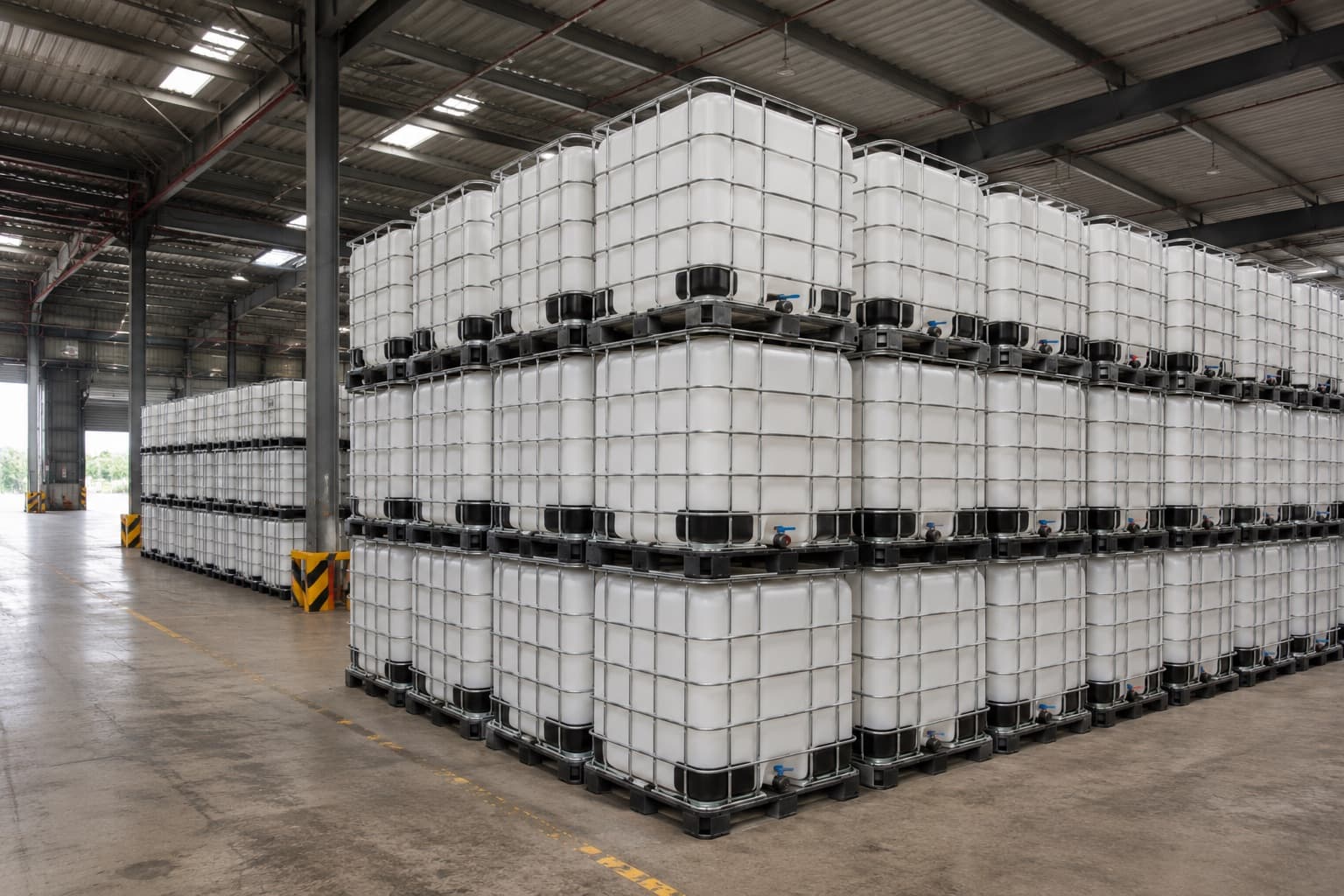
- Bottling in Europe: the oil travels in bulk (flexitank, IBC) and is filled close to the market; shorter runs become possible, replenishment is fast, formats stay flexible. The counterparts: higher co-packing cost and one more logistics link.
Virginia runs both setups — bottling at source in Tunisia and through its partner plant in Italy — so the choice can be made SKU by SKU rather than imposed by the supplier's footprint. The second setup is described in detail in our article on olive oil contract bottling and co-packing.
MOQs and the cost structure of a finished bottle
Realistic market minimums are counted in pallets: a first production run starts to make economic sense from a few thousand bottles and becomes optimal at a full container. Below that, the fixed costs — line changeover, printing, quality checks — dilute poorly. A dedicated glass mould is only justified from several tens of thousands of units: a standard bottle with well-executed artwork delivers most of the brand effect for a fraction of the investment.
Beyond the oil, here is what makes the price of a finished bottle:
| Cost item | What makes it move | Optimisation lever |
|---|---|---|
| Oil | Grade, analytical profile, organic, timing in the campaign | Specify to actual need; contract early in the campaign |
| Glass bottle | Format, colour, standard vs dedicated mould, glass prices | Standard mould differentiated by artwork; stick to 500/750 mL |
| Closure | Plain screw cap, integrated pourer, tamper-evident overcap | Standard non-refillable pourer rather than a custom part |
| Label | Number of languages, paper stock, foil, embossing, run size | Digital printing for short runs; pool SKUs per market |
| Carton and dunnage | 6 or 12-bottle cases, dividers, flute quality | Standard case, optimised palletisation plan |
| Filling (co-packing) | Run size, format changeovers, quality controls | Group formats, produce by full container |
| Logistics | Distance, mode (EU truck, sea freight), fill rate | Full container or truck; avoid orphan pallets |
The practical consequence: unit price falls sharply between the first pallet and the first container. Costing a private label project on a 500-bottle quote is economically meaningless — the run size makes the price.
Lead times, item by item
For a first production run, allow 2 to 4 weeks between the approved brief and the first loading, depending on glass and label supply. The critical path is almost always the same: a rare bottle colour or shape, a special label paper or foil stamping stretches the schedule far more than the filling itself, which is measured in days. Replenishment runs are shorter once components are referenced. Transit comes on top — sea freight overseas, road within Europe.
The pitfalls that cost real money
- A non-compliant label: wrong category wording, missing origin, nutrition panel in the wrong format, no Arabic for the Gulf — the outcome is a customs or retail-DC block and manual relabelling that wipes out the lot's margin.
- Underestimating glass: approving artwork before securing the bottle means discovering that your chosen colour is weeks away. Book the glass at the same time as the oil.
- Neglected date marking: a typical best-before window runs 12 to 18 months depending on profile and market — set it too long and your brand ships tired oil at end of life; an illegible lot code makes any targeted recall impossible.
- No quality contract: without a COA for each bottled lot, a contractual reference sample and the option of independent counter-analysis (SGS-type) at loading, you have no documented recourse if a lot drifts.
Protecting the recipe, campaign after campaign
A private label is only worth building if the customer finds the same product in year three. The safeguard is a two-sided specification annexed to the contract: analytical windows (maximum acidity, peroxide value, K232/K270, a polyphenol floor where relevant) and a target sensory profile (fruitiness, bitterness and pungency intensities, zero defect median), built on a varietal blending logic that can be reproduced. At each new campaign, a pre-production match sample is approved against the reference before any run is released. That mechanism — not the supplier's goodwill — is what keeps the taste constant.
Your brand, from the source
A private label stands or falls on three locks — a profile approved against a contractual sample, artwork that clears your target market's rulebook, and a run sized to the container — and that is exactly what we frame with you from the first brief. As a trader backed by partner mills supplying more than 30,000 tonnes per campaign, Virginia bottles your SKU in Tunisia or Italy, each lot shipping with its own COA. Explore our wholesale bottled olive oil and private label offer or request a quote — an answer within 24 business hours, samples before any commitment.
Read next

MarketGuides
Bulk Olive Oil for Nutraceuticals and Softgels
Olive oil as a softgel carrier oil and nutraceutical ingredient: Ph. Eur., USP-NF, oxidative stability, specs and bulk sourcing for encapsulators.
September 2, 2026 · 7 min read
GuidesQuality
Deodorized Olive Oil: The Industrial Buyer's Guide
Deodorized olive oil explained: the refining process, uses in frying, canning and cosmetics, and the COA specs to demand before buying it in bulk.
August 28, 2026 · 7 min read
Tell us what you need.
Volume, grade, packaging, destination: describe your project and we'll get back to you within one business day with an offer at the best price — or the right questions.