
Bulk Tunisian Olive Oil Price: How It Forms, When to Buy
Published on July 8, 2026 · Updated on July 12, 2026 · 8 min
By the Virginia trading team · reviewed by Tarek Neffati, president
There is no single "Tunisian olive oil price" — there is a price grid that rebuilds itself continuously from a handful of variables: the Mediterranean harvest, the grade and lab profile of the lot, certification, packaging, the incoterm and the point reached in the campaign. A buyer who understands this mechanism knows why two offers can sit several hundred euros per tonne apart, and more importantly when and how to take a position. Here is how bulk prices form, where to track the reference quotes, and how to turn an ex-Tunisia price into a landed cost you can actually compare.
Six factors that set the price of a lot
The world harvest, with Spain conducting
Spain is by far the world's largest producer, and it sets the market's direction: a big Spanish crop softens every origin, a short one tightens them all. Prices start moving before the oil even exists, as soon as the first crop estimates circulate in autumn. Tunisia amplifies or dampens the move depending on its own production, which alternates sharply from year to year — its orchards are mostly rain-fed and respond directly to rainfall. The full calendar and this balancing mechanism are covered in our analysis of the 2025-2026 campaign: harvest calendar and pricing; this article focuses on what separates two offers on any given date.
Grade and analytical profile
At any point in time the hierarchy is stable: extra virgin trades above virgin, which trades above lampante destined for refining. Within extra virgin, the market pays for analytical headroom: free acidity at 0.3% where the standard allows 0.8%, a low peroxide value, UV absorbance well inside the limits, high polyphenols. Early-harvest oils with an intense green-fruity profile command the strongest premiums. Every line of a specification has a price — a spec sheet written tighter than your end use requires is paid for in cash, container after container.
Organic versus conventional
Organic consistently trades above conventional, with a premium that breathes with availability. Tunisia ranks among the world's leading producers of organic olive oil — a genuine advantage for buyers — but certified volumes remain a minority of total output: the best organic lots are booked early in the campaign.
Volume and packaging
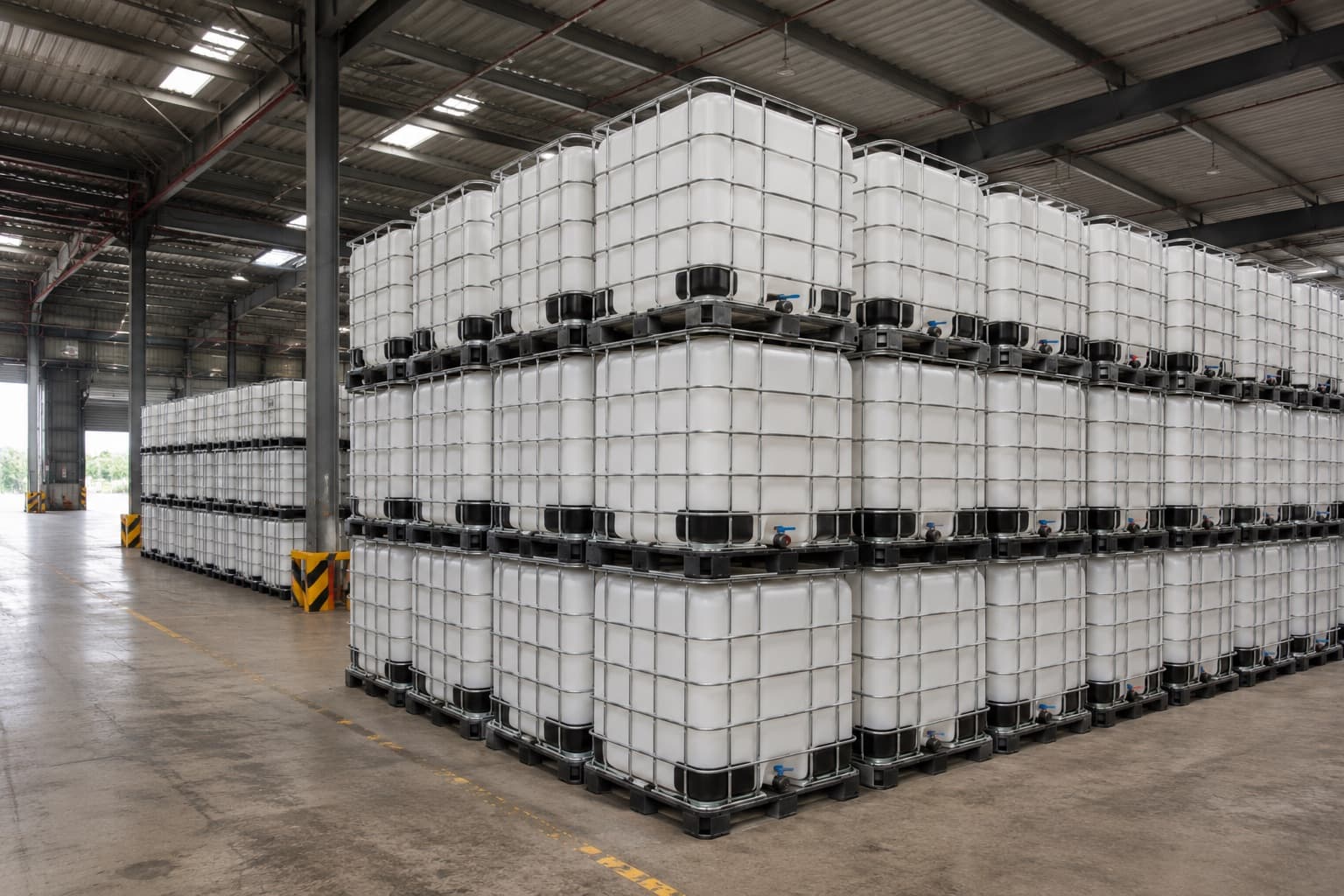
Sea-going bulk optimises the price per tonne: a flexitank loads 21 to 24 t in a 20' container, an isotank 24 to 26 t. Drums and IBCs make sense for smaller or split volumes but mechanically raise the cost per kilo — packaging, handling, container fill rate. Unit price also falls with committed volume: a contract covering several containers negotiates better than an isolated lot.
The incoterm
An EXW Sfax price, an FOB Radès price and a CIF North Europe price are not comparable: the gap covers pre-carriage, freight, insurance and, depending on the term, customs clearance. The incoterm also allocates risk — damage, delay, freight increases. The only honest basis for comparing two suppliers is the landed cost at your site.
Timing within the campaign
The same grade is not worth the same money in November, February and August. Early campaign: premiums on green-fruity, low-acidity oils that everyone wants. Mid-campaign, December to January: maximum availability and the widest choice. Late campaign: the best lots grow scarce and their premium climbs back. Buying at the right moment means trading off visibility on the year's quality against depth of supply.
Why Tunisia trades below Spain and Italy
At equal grade and equal analysis, Tunisian origin generally trades below Spain, which itself trades below Italy. The discount is structural and says nothing about intrinsic quality:
- Cost structure: largely rain-fed orchards, low input intensity, land and labour costs below those of Europe's big irrigated basins.
- Demand structure: most Tunisian oil is exported in bulk to bottlers who use it, alone or in blends, to build their cost price. An origin bought to optimise a blending cost trades, by construction, below the market reference.
- Origin image: "origin Spain" or "origin Italy" labels earn a premium on the shelf; Tunisian oil, often bottled under other flags, captures little of it so far — which is precisely what makes it attractive to buy.
- Customs friction: outside the duty-free quota, entry into the EU carries the full tariff, which weighs on the price an importer can accept ex-Tunisia.
The width of the spread breathes with the campaigns: it compresses when Spain is short of oil and reopens when Spain produces in abundance. To size up the origin — volumes, alternate bearing, organic share — our review of Tunisia's olive oil production figures gives the orders of magnitude.
Where to track bulk prices
No screen quotes "Tunisian olive oil" in real time, but several reliable public sources give the trend:
- The International Olive Council (IOC) publishes producer price monitoring for the reference markets — Jaén for Spain, Bari for Italy, Chania for Greece — alongside world production and trade statistics.
- Poolred (Fundación del Olivar, Jaén) records actual origin-market transactions in Spain: the de facto benchmark for the Mediterranean basin.
- ISMEA tracks wholesale prices on the Italian markets, useful for positioning premium profiles.
- The European Commission consolidates the weekly prices reported by member states in its olive oil market observatory.
- On the Tunisian side, the Office National de l'Huile (ONH) publishes export volumes and the origin's average export prices.
These indices give you the trend, not your price: a real lot is quoted with its COA, its volume, its packaging and its incoterm. Their value lies in grounding a negotiation, indexing a contract and triggering buying windows.
Managing price risk: contracts, indexation, clauses
On a market capable of large swings from one campaign to the next, price risk is managed in the drafting of the contract:
- Fixed price: simple and budgetable; the buyer pays for certainty, the seller carries the upside risk.
- Indexed price: the contract references a public index (Poolred, IOC prices) with a formula of the type "index minus Tunisia discount" and fixation windows at the buyer's hand.
- Revision clause: beyond an agreed variation threshold on the reference index, the price reopens — symmetrical protection against extreme campaigns.
- Volume tolerance: flexibility of around ±10% per shipment absorbs industrial contingencies without renegotiation.
- Staggered shipments: a campaign contract with spread deliveries smooths both the average price and the cash requirement.
In practice, industrial buyers combine a contracted base for certain needs with a spot component for adjustment and opportunities.
From ex-works price to landed cost
An ex-works price only becomes comparable once rebuilt into a landed cost, line by line:
- Goods price (EXW or FOB Tunisia), with the COA attached to the lot.
- Bulk packaging: flexitank (single-use liner, fitting and accessories) or isotank.
- Ocean freight and surcharges to your port, insurance on the transported value.
- Port handling and customs clearance: THC, handling, forwarding fees.
- Customs duty: the EU opens an annual quota of 56,700 t of Tunisian virgin olive oil at zero duty (Regulation (EC) No 1918/2006), managed through import licences and regularly exhausted in the course of the year. Outside the quota, the full tariff applies — in the order of €1,200 to €1,350 per tonne depending on the customs code — unless you operate under inward processing for re-export after transformation.
- On-carriage and discharge at your site.
On a 22 t flexitank, every line weighs several percentage points: the sum decides between two offers, never the headline price. Our landed cost calculators run this arithmetic line by line, from the mill gate to your tank.
The buyer's dashboard
| Price factor | Typical impact | How to act |
|---|---|---|
| Spanish harvest | Sets the market's direction across all origins | Follow crop estimates from September, time fixation windows around them |
| Grade and acidity | Stepwise premiums: extra virgin, low acidity, green fruitiness | Specify to the real needs of the end use, not to the maximum |
| Organic certification | Structural premium, limited volumes | Book certified lots early in the campaign |
| Campaign timing | Premiums early, scarcity of fine lots late | Cover firm needs early, keep spot for adjustment |
| Volume and packaging | Price per kilo falls with volume; flexitank optimal | Consolidate into full containers, stagger the pickups |
| Incoterm | Shifts costs and risks between seller and buyer | Compare every offer on landed cost, like for like |
| EU customs | Zero duty within quota, full tariff beyond | Anticipate licences, check quota status before fixing |
Timing your purchase, in practice
- September-October: follow the crop estimates, Spain first; prepare your specification and logistics plan.
- November-January: qualify lots on samples and certificates of analysis, contract the base of your needs during peak availability.
- Throughout the campaign: keep a spot share, triggered by your reference indices rather than by gut feeling.
- At all times: think landed cost, never ex-works price; document every lot — COA, seals, counter-analysis at loading.
A real price, on a real lot
A Virginia quote is never an indicative grid: it is tied to an existing lot, identified at one of our partner mills — more than 30,000 tonnes per campaign — with its analysis report attached. Send us your specification — grade, volume, target incoterm — through our quote request: we qualify your requirement within 24 business hours, samples and COA before any commitment, and current availability is always listed on our bulk offer.
Read next

MarketGuides
Bulk Olive Oil for Nutraceuticals and Softgels
Olive oil as a softgel carrier oil and nutraceutical ingredient: Ph. Eur., USP-NF, oxidative stability, specs and bulk sourcing for encapsulators.
September 2, 2026 · 7 min read
GuidesQuality
Deodorized Olive Oil: The Industrial Buyer's Guide
Deodorized olive oil explained: the refining process, uses in frying, canning and cosmetics, and the COA specs to demand before buying it in bulk.
August 28, 2026 · 7 min read

Tell us what you need.
Volume, grade, packaging, destination: describe your project and we'll get back to you within one business day with an offer at the best price — or the right questions.